The last couple of weeks

These last couple of weeks or so, as we’ve been cycling through New England, have been some of the best of our trip for me, first and foremost and not surprisingly, because of the people we’ve met up with. In New York, my sister, her husband and two of their three daughters drove from Ithaca to Fair Haven, NY–over an hour’s drive–to meet us for dinner. It was great to see them all and be able to catch up, which we hope to do more of in September when we all get together in CA for a nephew’s wedding. Also, they had arranged for a dinner at a gorgeous water-front restaurant. It was definitely one of the best meals of our trip. We were doubly lucky since our motel was miles from a place to eat and I’m not sure if the town had any taxis to drive us to dinner had we not been dining with my sister. And the last thing we want to do after a hard day’s ride is bike to and from dinner. My brother-in-law had also decided that, since there seemed to be no breakfast place in town, he would organize a boxed breakfast. The sandwiches were incredibly yummy and so big that the leftovers became our lunch.
image

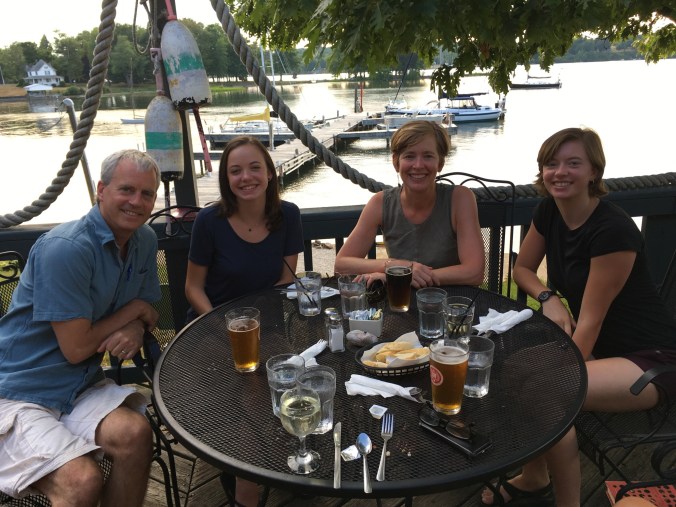
My sister, Anke, her husband Ric and two of their daughters Marin and Rory at the beautiful lake location where we had dinner.

A few days later, we rode to Buffalo where a college classmate had reached out to us when she read in the alumni magazine that we were biking cross-country to benefit the Frank Lloyd Wright Foundation and invited us to spend a night in her home, just around the corner from the Darwin Martin House. Jennifer and I couldn’t quite put a finger on how we had known each other at Dartmouth, but after spending a day with her and her kids, I wished that we had spent more time together in college. But there’s always time to make up for that now and I hope we have more opportunities to get together in the future.

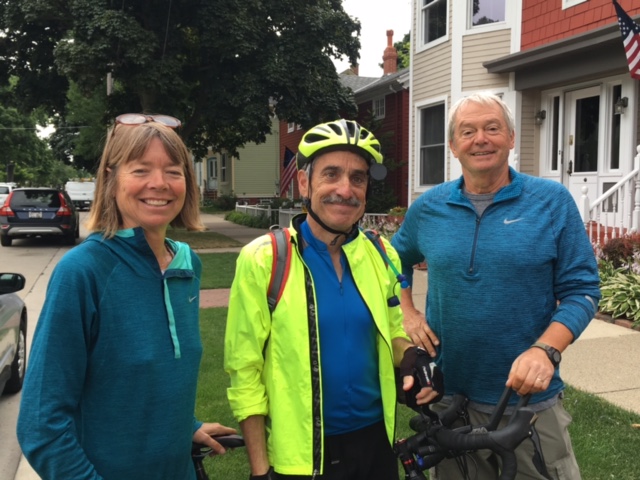
A few days later, we cycled into East Thetford, VT where we were met by one of our oldest and dearest friends, Camilla, with whom we just spent two nights and a rest day in Hanover, NH. We squeezed our bikes into her mini-van and she drove us to and from her place and our route. We had such a wonderful time with her–catching up, talking politics, watching the Olympics and eating and drinking to our hearts content including an incredible home made peach/blueberry pie and homemade chocolate malts. Camilla knows us way too well and had all our favorite foods and drinks. And she treated us to a wonderful massage. We have found that periodic massages really make all the difference! My shoulder has been SOOOO much better. While in Hanover we had drinks with an old college roommate, Deb. It was so much fun to talk about old times and great to realize that my difficulty in remembering exactly who I had roomed with at Dartmouth was not unique to me. Deb also gave us great tips on places to travel to, so our travel “to do” list as just grown by leaps and bounds. Earlier that day Camilla drove us to Manchester where we met up with another old college roommate, Judy, for lunch and a tour of Frank Lloyd Wright’s Zimmerman House. Again, it was great to see Judy and I just wish that we all lived much closer together so we could see each other more often.
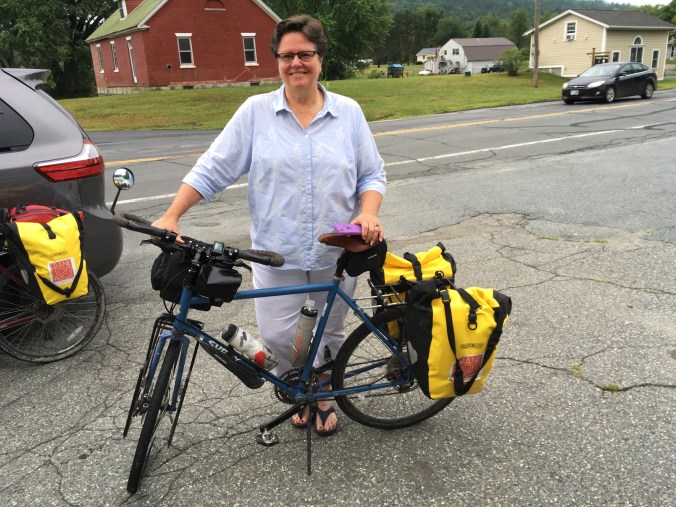
image.jpeg

We tried to convince Camilla to join us on our ride, but this was as close as we got her to come–dropping us off on our route after a wonderful stay with her.

We then stayed with another old housemate from my SAIS days just outside Lincoln, VT, the next night. Larry drove over 2 hours from Boston, had organized for the local bike shop to store our bikes overnight, and drove us to his vacation condo 30 minutes away where we had a wonderful dinner, watched the Olympics and spent the night. We hadn’t seen Larry in about 7 years so had a lot of catching up to do. We really appreciate that he drove almost 5 hours back and forth to spend a little time with us.

Getting together to with friends over the course of this trip has been a highlight and has made me realize how lucky we are to know such wonderful people. We will definitely make more of an effort to meet up with them more frequently.

A second highlight of the last 10 days or so has been riding through New England where I spent my junior high, high school and college years. It’s been wonderful for me to ride through this beautiful area of the US and to remember trips and activities of my youth: picking blueberries and apples, swimming in pristine lakes, visiting the Niagara Falls, and hiking through gorgeous landscapes. I definitely miss the water that is all around us here–just in case you haven’t noticed from the fact that so many of my photos are water centric. I am looking forward to riding into Acadia National Park where we spent huge chunks of our summers and weekends over the course of the years we lived in Maine.
image

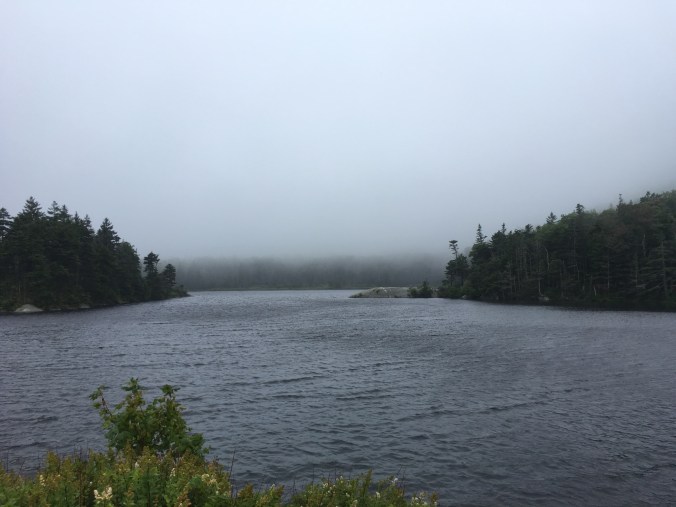
Another aquatic photo from yesterday in New Hampshire.
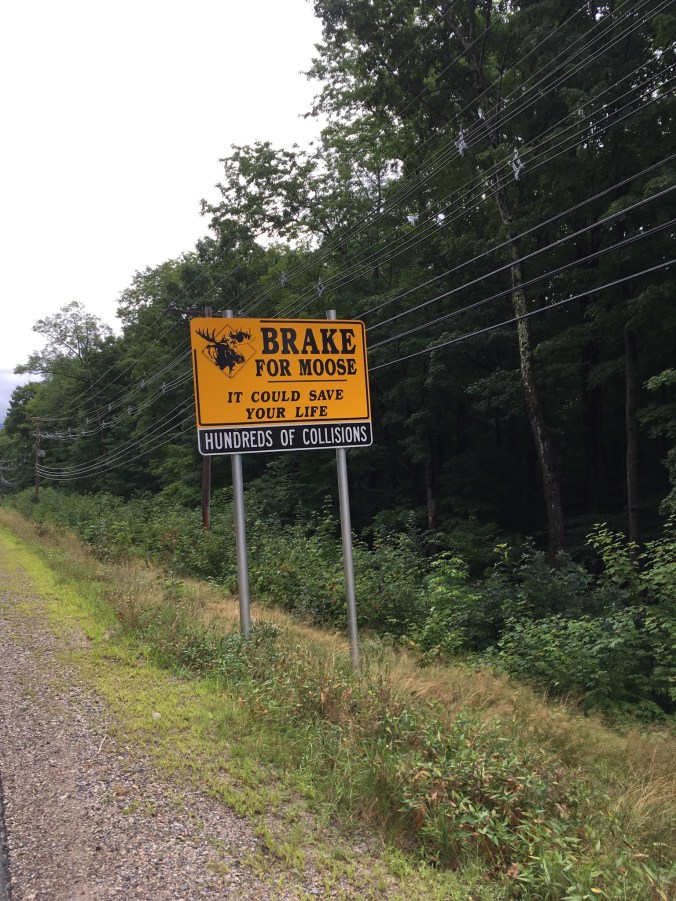
image.jpeg

We haven’t seen any moose yet, but seeing this sign reminded me of the time a moose peered into my classroom window in 5th grade. What a shocker that was!

And finally, watching the Olympics has been so inspiring. I’ve stayed up until midnight on many nights watching the swimmers and gymnasts win so many golds and have been in tears most nights as I listen to their stories. I am awed by how hard they have worked to get where they are and happy that all of their hard work has paid off. Another of my college roommates won a silver medal in rowing (single scull) so I am well aware of the sacrifices each one of these Olympians has made to get to where they are today, making winning look so easy. I admit that during the course of the day, when I may be struggling on a particularly difficult climb, I think of how hard these athletes have worked and that encouraged me to keep going. I’m sorry that the swimming is over now, but happy that I can get back to a normal sleep routine. 😉

Only four more days until we ride into Bar Harbor. Hard to believe. The weeks have flown by.


Day 73 – Zimmerman House

We started the day with excellent massages arranged by Camilla. After getting Maja a new front tire yesterday, I was thinking I may need new ones, too, so while Maja was getting her treatment I took my bike to Omer and Bob’s to have them take a look. Over the last few days I had the feeling that my tires were at the very least under inflated and seemed as though I was struggling up the hills and couldn’t even catch Maja on the downhills, usually, because of my weight advantage, where I can shine. The mechanic looked at the tires and said they were still in good shape and didn’t need replacing. I asked him to inflate them using the shop’s pump and gauge to check that the tires were inflated to the recommended 65 psi. I had been topping them up periodically with my travel pump and gauge to that pressure since Montana. I was very surprised when he checked and each tire was only up to 30 psi!!! No wonder I thought I was fighting against my tires. The new pump/gauge I bought in Minnesota is worthless. I hope proper inflation will help me on the hills.

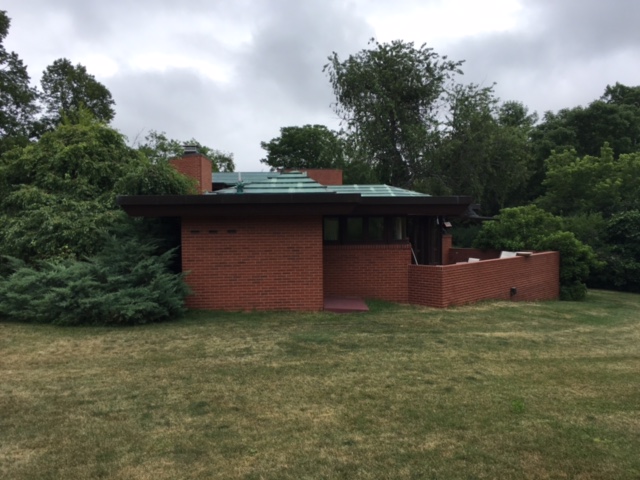
After all this excitement we drove to Marchester for our scheduled tour of the Zimmerman house, the last Wright building we will visit on our cross country ride. Wright designed this Usonian house for his clients, Dr. Isadore and Lucille Zimmerman, in 1950. When built the house was often ridiculed by the neighbors since it didn’t fit the style of the other houses but the Zimmerman’s said it was the best money they ever spent. They left the house to the Currier Museum that undertook major renovations and now curates the house.

The house is similar to the other Usonian houses we have seen but is a later refinement of Wright’s design – L shape open plan, radiant heating, natural ventilation and blending of interior and exterior spaces. Visitors are not allowed to take pictures on the inside so follow up with this web site for photos of the house.

I’ll add to this entry in a few days with more details.

Day 64 – Buffalo to Lockport (Erie Canal)

58 miles. Via the Canadian side of Niagara Falls.(“Slowly I turned. Step by step …”)

image

Another “ersatz” Wright building, the Fontana Boathouse along the Niagara River in Buffalo. Wright designed it in 1905 to be built at the University of Wisconsin and this was eventually built in Buffalo in 2007

We backtracked a little this morning to get back on the Canadian side since we had heard that the bike path up to Niagara Falls was better on that side and, more importantly, the falls are prettier on the Canadian side. The bike path was a little twisty and turney and not in that great shape but it was quiet and shaded. Along the way we passed the site of the Battle of Chippawa marking the first “invasion” of American troops into Canada to fight the British in the War of 1812.

After learning how the “invaders” were ultimately driven back across the river, we continued to the Falls. I have to admit that for my entire life I thought that the Niagara River flowed over the Falls and emptied into Lake Erie. Wrong!! Learn something every day, eh?

The falls are spectacular and we joined a throng of tourists from all over the world as we got soaked by the spray and posed for the obligatory photo.

image.jpeg

Horseshoe Falls. The spray is visible from several miles away. The view from the American side is on the edge of the falls looking down.

image.jpeg

Our obligatory photo with American Falls in the background

Pressing on after that we rode north and crossed back over into the US eventually finding our way to Lockport, near the eastern terminus of the Erie Canal along which we will be riding for the next couple of days.

image.jpeg

We rode under the Rainbow Bridge and thought this looked very cathedral like.


Darwin Martin House Part 2

image

One of a dozen or so different leaded glass designs Wright used. Actually this window is a “place keeper” of thin, clear plastic while the new leaded glass window is being made.

I crashed last night before I could do this magnificent house justice so I’ll try to do better today before I write our blog. The scale of the details that Wright specified in the Martin House is overwhelming and for me that makes this house his boldest Prairie house statement. I know from my own experience that one does not often pair with a client who has the temperament and means to give the architect free rein but Darwin Martin seemed to approach that ideal. To have been witness to the meetings between Martin and Wright would have been to watch Wright in full and glorious flight as he described his ideas from all altitudes, from the 30,000 foot view of the entire project down to the 1 foot or lower details. Martin allowed Wright to bring his full genius to bear and introduced him to other Buffalo clients like the Larkin Company where he was able to express his ideas of how a business should be organized and streamlined hierarchically. Sadly the Larkin Building does not exist now except in photos.

One of the concepts that Wright innovated at the Martin house that had no equivalent at the time was exploding the box of the house freeing up an interior space with few walls or divisions between living areas and bringing the supporting structure into the interior allowing the exterior walls to be fenestrated to a degree never seen before. Using leaded glass designs he created rows of multi-colored windows that brought light and color inside this new “exploded box” bringing exterior and interior areas together.

I could go on with my admiration of the Martin House and the level of quality of its restoration but others have studied the house and written more eloquently about it so I encourage you to start with a Google search and include as many images as you can pull up. Here are a few more of ours from yesterday.

image

The view from the main house down the pergolas to the conservatory. The glass in the floor allows light from the lower level to softly light the path at night.

image.jpeg

This light is a manifestation of Wright’s desire to design the entire house environment

image.jpeg

Exterior space outside the living room that becomes one with the interior space

image.jpeg

Looking back to the pergola from the conservatory


Day 63 – Dunnville to Buffalo

48 miles. Many on the Friendship Trail Bike Path

We slept in a bit and managed to get away from Dunnville around 8. We got “temporarily confused” again since there are two different highways there both numbered “3” – one is a county road and the other a provincial highway. We managed to get it figured out and rode along the coast on relatively quiet roads.

After 24 miles we got to Port Colborne and hooked up with the Friendship Trail, paved all the way to the Peace Bridge back to the good old USA. Among the way we passed the former site of the Erie Beach Hotel. W.E.B DuBois organized the founding meeting of the Niagara Movement there as a counter to what he considered Booker T. Washington‘s more moderate approach to the fight for black civil rights.

We had to bike across the bridge that was totally jammed up with traffic in both directions! We passed a whole line of cars and trucks but then had to wait for the immigration agent to let us in for the interview. Eventually we made it through and were back on the streets of the Buffalo waterfront.

We spent the night with a former Dartmouth classmate of Maja’s who had reached out to us when she heard about our ride through the alumni magazine’s class notes.  We had a wonderful time catching up with her and meeting two of her four kids.

Buffalo at one point (around the end of the 19th century) was a very prosperous shipping and manufacturing center but like most rust belt cities has fallen on harder times. It boasts a neighborhood and park designed by Frederick Law Olmstead and buildings by Wright, Sullivan, Richardson and Saarinen. And the target of our visit today was the Darwin Martin complex.

We met Mary Roberts, the Executive Director of the Martin House Restoration Corporation, who gave us an in depth look at the massive effort involved with the organization and carrying out of the beautiful renovations. The house is Wright’s largest and most complex Prairie Style design from the early 1900s and was conceived as a family compound. He utilized many innovative concepts in both its design and construction.

I’ll include a few of our photos here and will post more tomorrow but for a better understanding of the house’s history and more pics you should start at these entries and go in deeper from there:


image.jpeg


image.jpeg

Wright’s leaded glass panels bring a kaleidoscope of color in the house from the outside as well as from electric lighting 

image.jpeg

The view down the long pergola completely and absolutely faithfully rebuilt


This beautiful built-in has two doors that open to reveal bookshelves and then the bookshelves open to more shelves behind them.

Day 59 – Rest and Wright house tour

We were both really ready for an off day and, having learned our lesson in Minneapolis, no matter how tempting it would be to spend more time with great friends, two days of rest is deleterious to energy and enthusiasm on the bike. So we’ll sadly cut this visit and head into Canada tomorrow.

image.jpeg

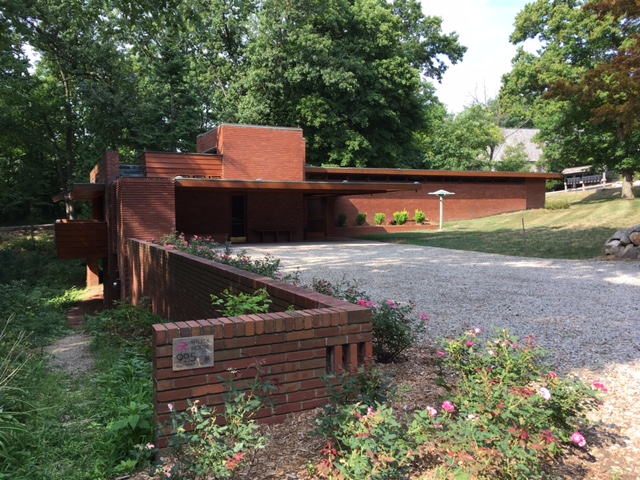
The Affleck House from the street. Originally, Wright had designed the drive to circle around the house at the rear and come to the carport from the right hand side.

Today we enjoyed a personal and very informative tour of the Affleck House in Bloomfield Hills. The house was one of Wright’s Usonian designs and is now curated by Lawrence Technological University. When it was built in 1941 the house was in a remote location but the area near Detroit has grown up around it and it is now surrounded by houses, condos and traffic on what is a major street. Nevertheless, one can get a good feel from the wooded lot of what the house was like when first built.

image.jpeg

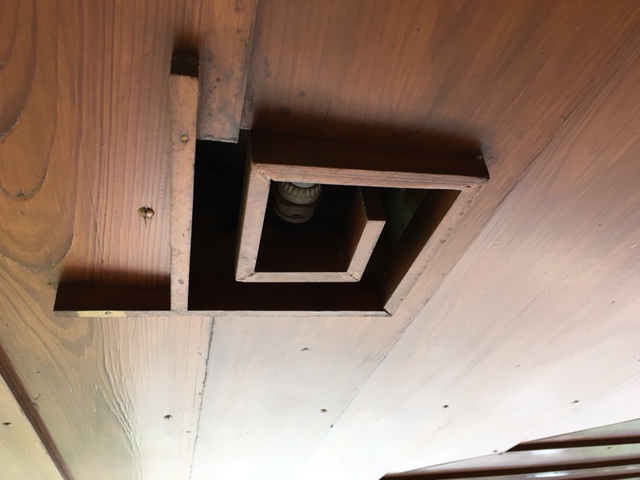
A beautiful Wright detail around a ceiling light at the entry

The docent Harvey who has a lot of insight about the Affleck house had worked on the Price Tower in Oklahoma, Wright’s only skyscraper, and was a visiting lecturer at Taliesin West. He gave us an in depth and detailed look at the house and sprinkled the tour with some entertaining Wright anecdotes. As with all our tours of Wright houses, our photos and words don’t do justice to the places so follow this link as a start. If you are interested in a tour, click on the “Tours” link on the ltu.edu page.

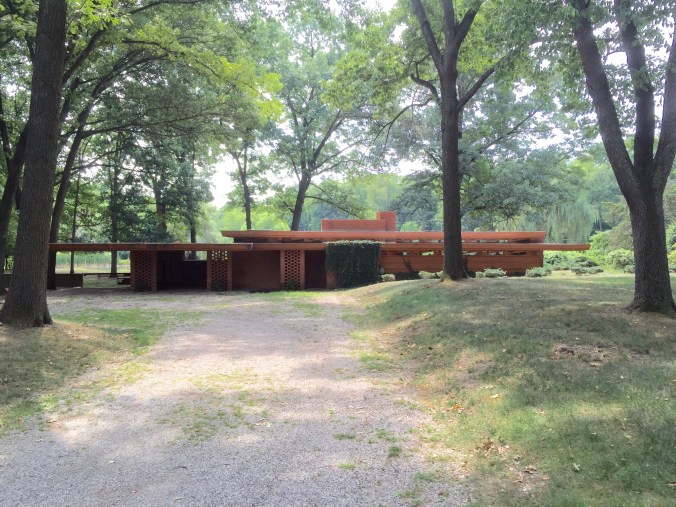
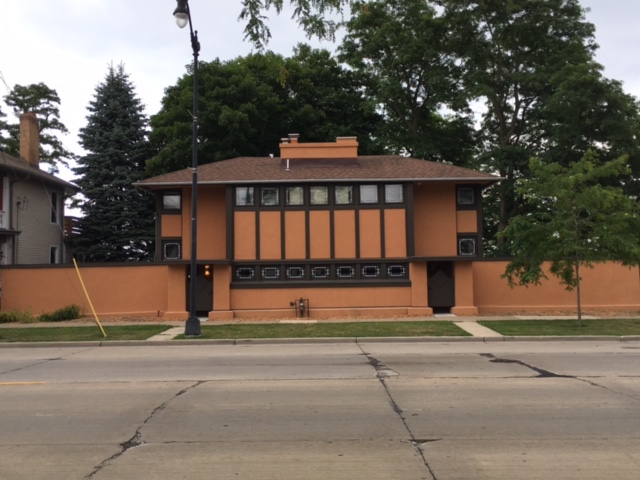
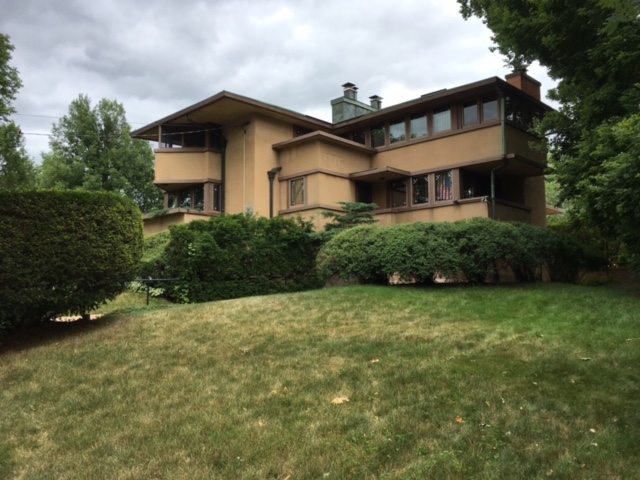
After seeing the Affleck house we drove by the Smith House, also a Wright Usonian nearby and drove into Detroit to get a view from the street of the Turkel House from 1955, a mix of Usonian and concrete block design.

image.jpeg


image.jpeg

The Smith House.


Reflections

27:11. Hint: you can enter both of the things I’m counting.

“In organic architecture, then, it is quite impossible to consider the building as one thing, it’s furnishings another, and it’s setting and environment still another.” –Frank Lloyd Wright

As we get ready to depart Wisconsin tomorrow, we are also leaving Frank Lloyd Wright’s home state and the area in which most of the FLW buildings we will see en route are located. Charles has already described most of these in previous postings. I just want to focus on a couple of things.

First, as Charles has mentioned, FLW was a major innovator in the field of architecture, being the first to design what we now call great rooms that combined kitchens with family and dining rooms, using under floor heating, track lighting, seamless window corners, and folding doors to open whole walls to the outside. He also invented the concept of car ports and, it can be argued, was the real father of ranch houses. The way he thought about his designs as being organic and part of the environment was truly unique. I could go on and on. But what really stood out from our visits of FLW homes was how far ahead he was of his architect cohort. His designs have much more in common with modern houses being built today, 70 or 80 years later, than they did with those of the day. FLW was truly a visionary. And so were his clients. They were individualists who valued what FLW had to offer and were willing to stand out in a crowd.

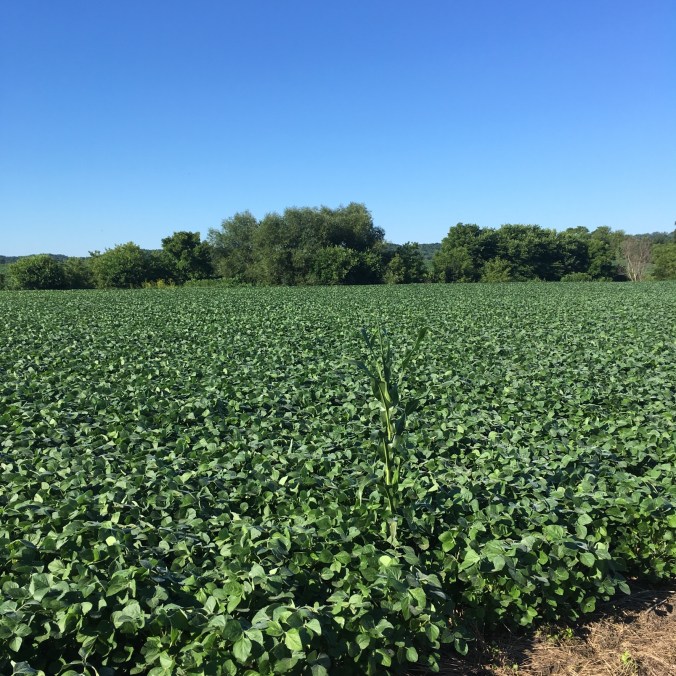
image

If you look closely enough, you will see one lone stalk of corn in a huge field of soy beans. The foot of the corn stalk is about an inch from the bottom of the photo and just right of center. I couldn’t help but think of the corn representing FLW, rising above his contemporaries.

We were lucky enough, on several occasions, to meet the owners or owner representatives of FLW houses that they had saved from almost certain destruction. Charles and I were so impressed with the passion that these owners brought to their homes, the precision with which they restored the structures, and their willingness to open the homes to the public. They, without exception, view what they are doing as a public service, both to the general public and their communities. We really couldn’t believe the “before” state to which some of these houses had fallen compared to the “after restoration” that we were viewing. In most cases, the restorations took years and costs hundreds of thousands of dollars over and above the purchase price for the house. In some cases, like for the Willey house, the new owners, using FLW’s original plans, finished several rooms that had never been completed by the original owners. We have so much to thank these individuals for and we look forward to keeping in touch with them.


Day 45 – Racine and Madison

Today was a rest and a pilgrimage day to see several Wright houses and buildings up close and personal.

Ray and Mary picked us up at Tan-y-Deri and we drove to Racine in a sometimes heavy downpour so we were glad we had picked that day to not be on our bikes! We met Mark Hertzberg at the Thomas P. Hardy house on the lake in Racine just a few blocks from Wright’s iconic Johnson’s Wax building and Research Tower.

Wright designed the house, built in 1905, in the Prarie School style with the main views toward Lake Michigan and turning a relatively blank face to the street. As with many of Wright’s houses, successive owners had made changes and also like others of his houses, the Hardy house had fallen into disrepair to be rescued by the current owner.

image.jpeg

image.jpeg

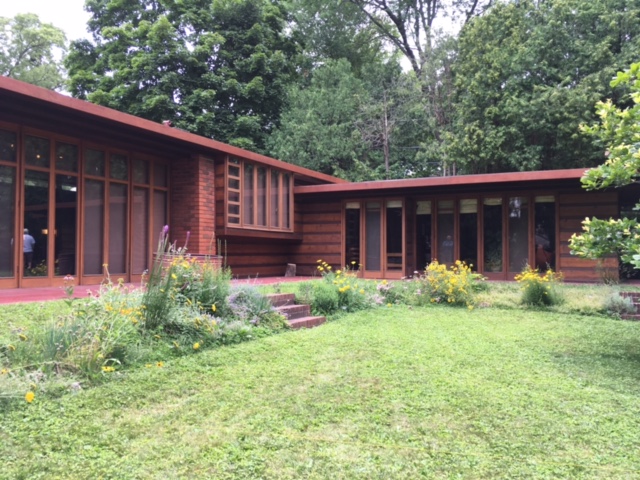
After a very informative tour Mark left us with George, the caretaker of our next Wright house, The Keland or Boyd house. Wright designed this house in 1954 for Karen Johnson, the daughter of Herbert Fisk Johnson of the Johnson’s Wax company. The house has seen many alterations designed after Wright’s death by architects at the Taliesin Fellowship so the changes remain true to Wright’s design and vision. Karen Johnson Boyd passed away earlier this year and the house displays her impressive art collection.

image.jpeg

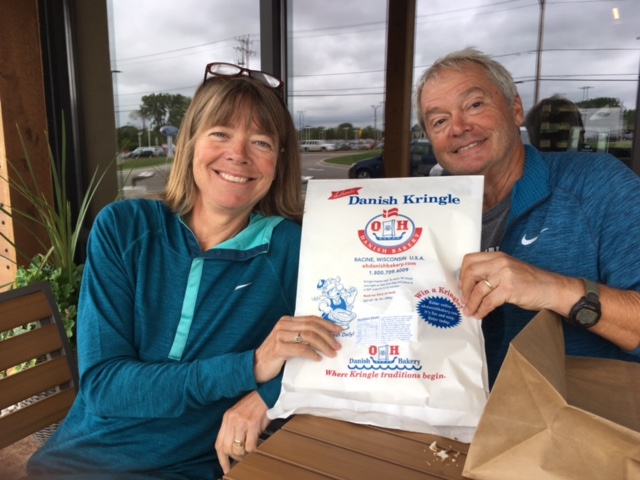
Not satisfied with seeing just two Wright houses we sped off to an appointment in Madison but not before stuffing ourselves with Racine’s famous “kringle,” a Danish sweet.

image.jpeg

We’re burning lots of calories so why not have one more piece?

Our first stop was the Jacobs I House and Bill, the caretaker of this National Registry property met us. After giving us a little history of the house on a double lot in Madison, he took us on a tour inside. Jacobs I is an early Usonian design from Wright and again, it has been rescued from disrepair by its current owner. The house features many of Frank Lloyd Wright’s innovations – car port (he invented the name), track lighting, radiant heating, modular “sandwich” wall panels, exterior doors that open full width including at the corner and other new ideas. Bill confirmed the legend that the brick used in Jacobs I came from the cast-off pile at the Johnson’s Wax Headquarters that Wright was building about the same time. By using these bricks, construction costs were kept down.

image

Leaving Jacobs I we drove to the Unitarian Meeting House (1951), a building recognized by the AIA as a significant contribution to American culture. Wright’s father was one of the founders of the original congregation and Wright often spoke at the meeting house.

Not finished yet, we drove by the Lamp House, hidden away on an interior lot near the Wisconsin state capital. The building now houses U Wisconsin students and as such is in a pretty sad state on the inside.

image.jpeg

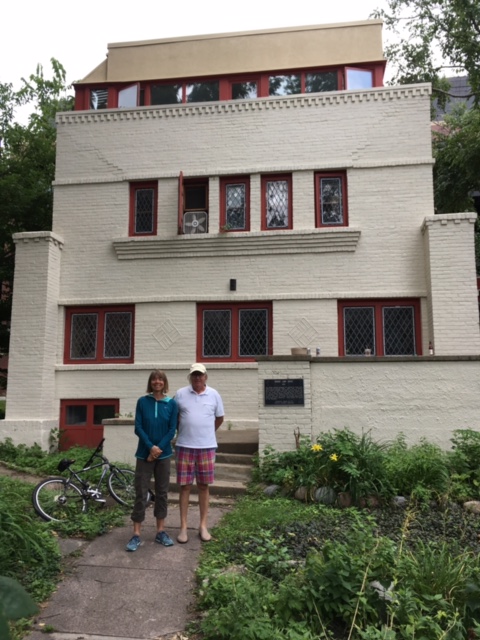
This was a hard one to find, the Lamp House. But Ray persevered and here’s the proof as he poses with Maja.

We drove by the Gilmore House, also known as the “Airplane House,” but were not able to go inside.

image.jpeg

After a much needed break for food at The Old Fashioned, where I was finally able to taste a Three Sheeps beer from Sheboygen (award winning beer from the son of an old friend of mine) we walked over to the Monona Terrace Community and Convention Center. Wright designed the complex in 1938 and it was finally built in 1997. Some call it “ersatz Wright” since it was constructed long after he passed away but the building is unmistakenly Wright.

That was our exhausting day of total Wright immersion. On the way back to Taliesin we heard the news about the attempted coup in Turkey, news made more important to us since the President and CEO of the Frank Lloyd Wright Foundation, Stuart Graf, is in Istanbul for World Heritage meetings. We were all relieved to hear that Stuart is not in harm’s way and is doing fine, hoping to return to the US as soon as the airport in Istanbul is open for US carriers to fly.


Day 44 – Hillsboro to Taliesin

52 miles to the triumphal entry to Taliesin. Cue the trumpet voluntary.

Starting from Hillsboro we were on state highway 80 with Ray leading the way. Mary kindly took our panniers in the car so we were without many pounds of gear. At one point I thought that even though I had dumped my bags the pedaling was still hard then looked down at my cycle computer and saw I was going 8 miles per hour faster than the day before.

image.jpeg

These rock outcroppings along the road reminded us of the strong horizontal lines of much of Wright’s architecture

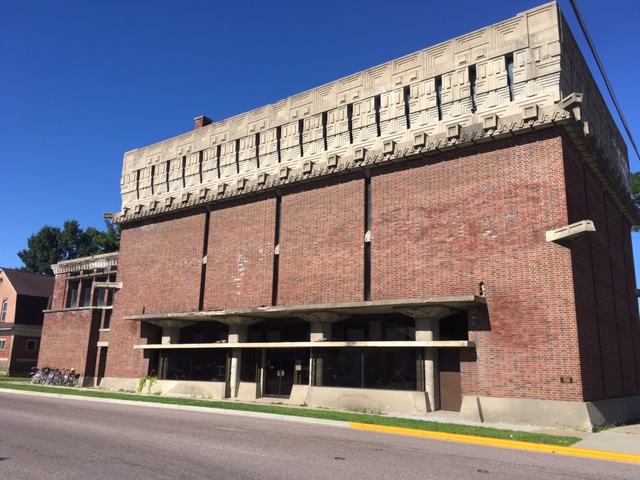
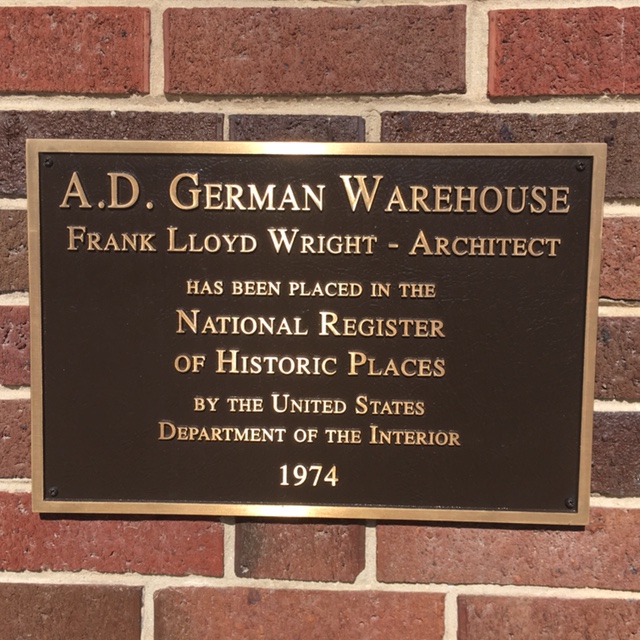
We made it to Richland Center at 9:15 and met Lon, the president of the A.D. German Warehouse Conservancy. Wright designed the building in the 1920s and it is the only Wright building in his home town of Richland Center. Lon met us at the building and after going over its history took us on a memorable tour both inside and outside. The Conservancy has great plans for the restoration of the warehouse but now runs tours on the weekends. I’ve included a few photos we took but to get the full impact of the warehouse’s presence and the revitalization efforts, visit their website: www.adgermanwarehouse.org.

image.jpeg

image

The building with its Mayan frieze on the top level stands out in Richland Center and Wright incorporated elements he had used in Midway Gardens and other projects. He and the owner, A.D. German had been friends since childhood and Wright traded design work for supplies needed to feed and care for the apprentices at Taliesin.

image

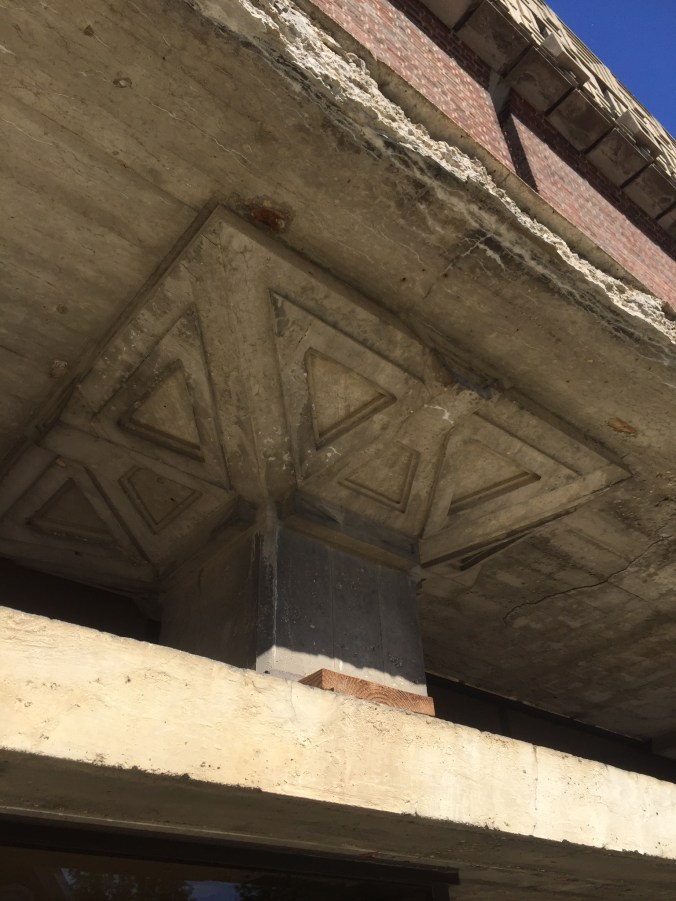
Wright developed an innovative (for the time) method of tying the concrete slabs into the columns and capitals so that the weight of the building and its contents were born on the columns and not the exterior brick walls. This construction method is standard practice now.

image.jpeg

Frank Lloyd Wright’s father was the pastor at this church (L) in Richland Center and the house on the right is the leading contender among 7 houses that are alleged to be Wright’s birthplace – no one knows for sure which house is truly the one in which he was born.

image

Our arrival with Wright’s Taliesin as backdrop

We reluctantly got back on our bikes for the remaining 27 miles to Spring Green and Taliesin. We stayed at Tan-y-Deri, a beautiful house Wright built for his aunts. Again, our photos don’t do the place justice so read about its history: https://en.m.wikipedia.org/wiki/A_Fireproof_House_for_$5000.  and http://www.flwright.org/researchexplore/wrightbuildings/porterhouse

Jason, the Residence Life Manager at the Frank Lloyd Wright School of Architecture, welcomed us in and generously provided us with food and drink to restore our road weary bones. We went to dinner with students and guests at Hillside and shared some of our stories from the trip.

image

Tomorrow we are off to see more Wright houses in Racine and Madison.

Wisconsinites

20:6.  I’m surprised by how many more of the one thing I’m counting there are than the other and also by how low both numbers are given that we’ve covered over 2,000 miles.

We are spending the night in Pepin, Wisconsin, a wonderful little lakeside town.  In fact, we had the best dinner of our trip so far at a restaurant called Harbor View Cafe. I would highly recommend it to anyone who is in this neck of the woods.

Also of interest is that Laura Ingalls Wilder, the author of Little House on the Prairie, was born just 6 miles north of here in February 1867, 4 months before Frank Lloyd Wright was born, also in Wisconsin–in Richland Center–about 120 miles or so from here.  Laura became a school teacher at age 16 and was married at age 18.  She didn’t start writing until age 65 and was surprised at how popular her books were.  She continued writing until her death in 1957 at age 90.

As I was reading the historic marker about Laura and realized that she was born the same year as Frank Lloyd Wright, I couldn’t help but compare her with him. There were certainly many similarities from the start-both were born in the same year in Wisconsin, not far apart, and both were from families of limited means but which were very focused on education.  Interestingly, neither had formal training in their field of success. Frank never went to architecture school and Laura never graduated from high school.  Both were also very successful late in their careers. While Frank had had major successes throughout his career, he also reinvented himself several times over the course of his life. For example, he started thinking about and planning the Guggenheim Museum–considered to be one of his masterpieces–about the same time as Laura began writing her books at age 65 and the building was completed in 1959, the year of Wright’s death at age 91.

Of course, there were also significant differences in their personalities.  Laura was very surprised that anyone would be interested in reading her books, since she didn’t consider herself a writer and was not particularly well educated even though she had been a teacher.  Frank, on the other hand, was supremely self-confident, bordering on arrogant, and once suggested that he could rebuild the nation in an interview with Mike Wallace.  I wonder what they thought of each other.  They were quite famous, so I imagine they knew of each other and their common backgrounds. It’s interesting to ponder…